
Decision Fatigue: How It Affects Your Leadership Decisions
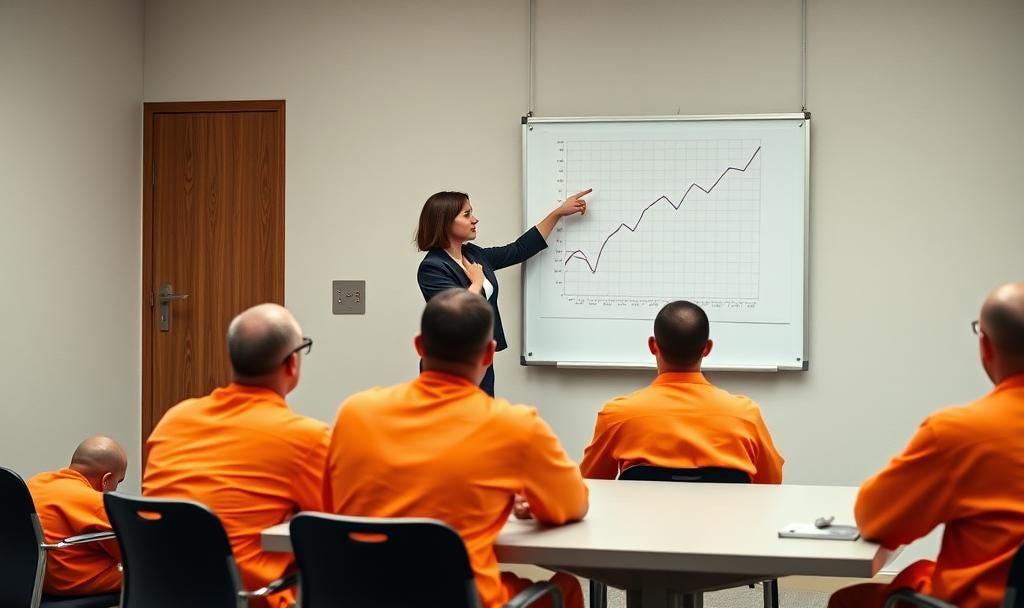
In a recent study, prisoners were found to be 65% more likely to get parole if the judge made the decision right after a break, compared to right before a break—regardless of the crime, time served, or other legal factors. Great to know as a convict, but what does this have to do with leadership?
Surprisingly... everything.
We’re often told to “get out of autopilot.” But what if autopilot is actually the secret weapon your brain needs to avoid burnout?
Think about it: brushing your teeth, driving the same route, or ordering that same latte—you do it all without thinking. Those automatic routines conserve energy, freeing your mind for the choices that truly matter.
This is the opposite of conscious, or “slow,” thinking. Slow thinking is deliberate and energy-intensive—it’s your conscious brain doing analysis, planning, and making complex decisions.
Psychologist Daniel Kahneman calls these two systems System 1 (autopilot) and System 2 (conscious thinking). System 1 runs automatically, with little effort, handling routine tasks and snap judgments. System 2 is slow, deliberate, and energy-intensive.
System 1 operates automatically and quickly, with little or no effort and no sense of voluntary control.
System 2 allocates attention to effortful mental activities that demand it, including complex computations. The operations of System 2 are often associated with the subjective experience of agency, choice, and concentration.
Every time you default to System 2 for the small stuff—what to eat for dinner, whether to reply to that email—you’re burning precious brain energy.
Eventually, you arrive at decision fatigue, where your judgment becomes sloppier as your mental energy depletes. The more fatigued we get, the more likely we are to choose the easiest option instead of the best one.
Let’s revisit those judges.
Every time a judge issues parole, they have to think carefully. They need to review the facts and weigh the possible consequences of putting someone back out on the streets. In addition, there is paperwork and logistics involved in granting parole. Denying parole, on the other hand, is much simpler—the prisoner just goes back to their cell.
Researchers found that across more than 1,000 parole decisions, the likelihood of parole being granted immediately after a break was about 65%. As judges continued making decision after decision over the next few hours, that likelihood steadily declined to almost zero.
Once we understand how decision making affects our decision making, we can begin to see the pattern.
Leaders experiencing decision fatigue often trigger autopilot for the wrong reasons:
Saying "yes" reflexively to every meeting.
Responding urgently to every email notification.
Defaulting to working late, even when it isn't strategic.
Meanwhile, they exhaust conscious energy on trivial decisions—dinner plans, inbox zero, what to wear—leaving very little for high-stakes thinking. As the brain tires and System 1 takes over, the quality of decisions begins to slip.
The Reframe: Autopilot as an Ally
Here’s the reframe: autopilot isn’t the enemy—it’s your energy-saving ally.
The real leadership question isn't, "How do I turn autopilot off?" It's, "Which decisions should I let autopilot handle, and which deserve my conscious attention?"
When you delegate routine choices to autopilot, your brain stays charged for the work that really moves the needle.
How can you use conscious thinking intentionally? Here's a quick breakdown:
Spot energy leaks. Track the small decisions that drain you (what to wear, routine email responses).
Set smart defaults. Pre-plan meals, outfits, and email templates to automate the easy stuff.
Audit autopilot habits. Identify what autopilot is handling now that shouldn't be (for example, habitually saying yes).
Upgrade autopilot routines. Build better habits like pausing before replying, creating morning rituals, or blocking uninterrupted thinking time.
Protect conscious time. Schedule strategic work when your brain is freshest—often first thing in the morning or immediately after a break.
By doing this, you’re not just avoiding decision fatigue—you’re intentionally designing your brain’s workload and preserving your energy for leadership-level choices.
Leadership isn’t about having infinite willpower. When you better understand how your brain works—and what is fueling your decisions—you can make better choices and show up as your best self.
So next time, let someone else decide where you're going for lunch.
You've got better things to think about.
Reflection prompt: Look at your week. Which choices drain you the most? Which could become automated or habitual? Where could autopilot step in so your conscious mind is reserved for what truly matters?
