What If Yoga Isn't About Relaxing? A Better Way to Build Resilience
I used to roll my eyes when someone told me I needed yoga. As a woman with a mile-long to-do list and a brain that doesn't know how to sit still, the idea of lying on a mat and "quieting my mind" sounded like a punishment—not a solution. I could fake it. To any outsider, I looked calm. But inside? My brain was scheduling meetings, reworking that email draft, and trying to remember if I left the dryer running. Yoga just didn't work for me.
Until I stumbled into a very different kind of yoga.
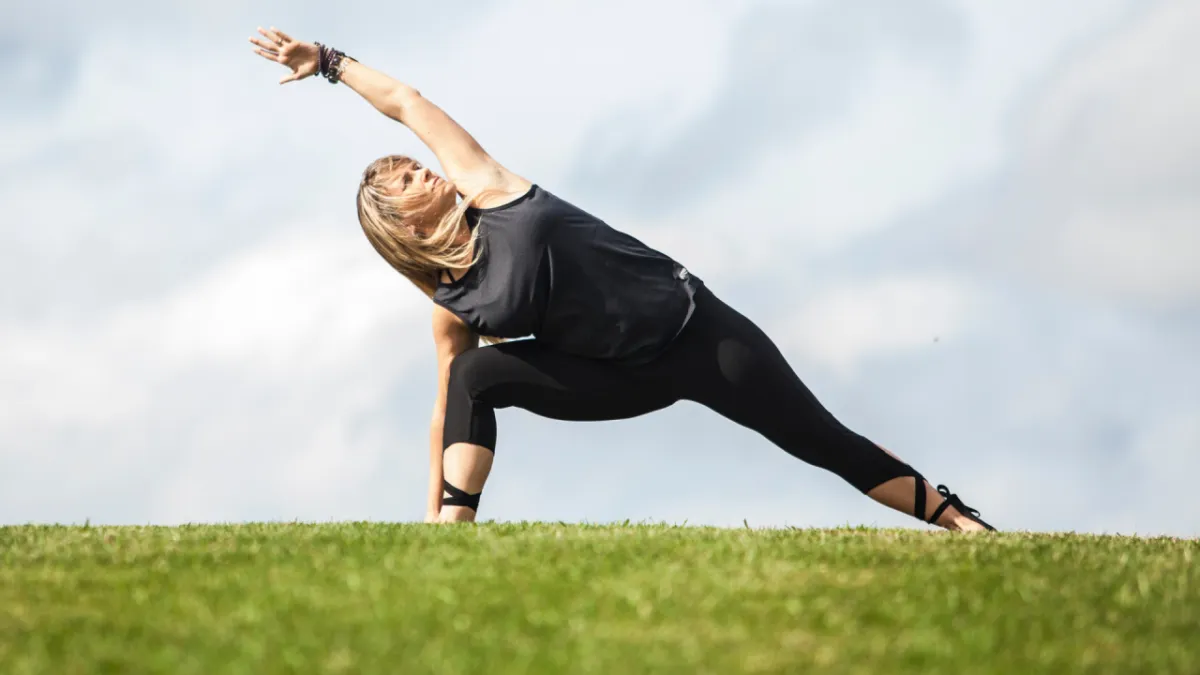
This one didn't ask me to relax. It asked me to stay in the discomfort. To hold the pose long enough that my legs were shaking and my brain was screaming for an exit strategy. To balance on one foot in a way so precarious that falling felt like a real possibility. To do something repetitive until my mind begged me to stop.
And in those moments—when my nervous system was fully activated and my subconscious was trying to take over—we practiced something radical: not fixing it, not escaping it, but learning how to breathe through it and soften around it. We practiced becoming comfortable being uncomfortable.
The yoga I incorporate into my burnout programs isn't your grandma's yoga. It's not about finding peace by avoiding stress. It's about practicing the tough stuff, over and over and over. Putting yourself willingly into uncomfortable situations—in a safe place like your mat—and becoming aware of how you react to the stress. Then changing that reaction, one breath at a time.
We practice building the muscle of resilience in your body so you can meet stress head-on without letting it take you out.
You can't drop into child's pose when your boss blindsides you with last-minute changes or your inbox explodes. But you can train yourself to act instead of react. And that training starts on the mat.
Being "centered" isn't about being calm all the time. It's about staying connected to yourself, especially when you're not calm.
And this is just one piece of the puzzle.
In my burnout work with women in leadership, we use movement in a few different ways: to create safe stress simulations so your body learns how to shift gears, to insert short pattern interrupts during the day that pull you out of autopilot, and yes, to stretch and mobilize—the kind that makes blood flow to the parts of your body your chair forgot about.
So no, I'm not here to tell you to relax. I'm here to show you how to train your body to not freak out when the pressure's on. Because if you're anything like I was, you don't need another nap. You need a nervous system that knows how to stay steady under fire.
